
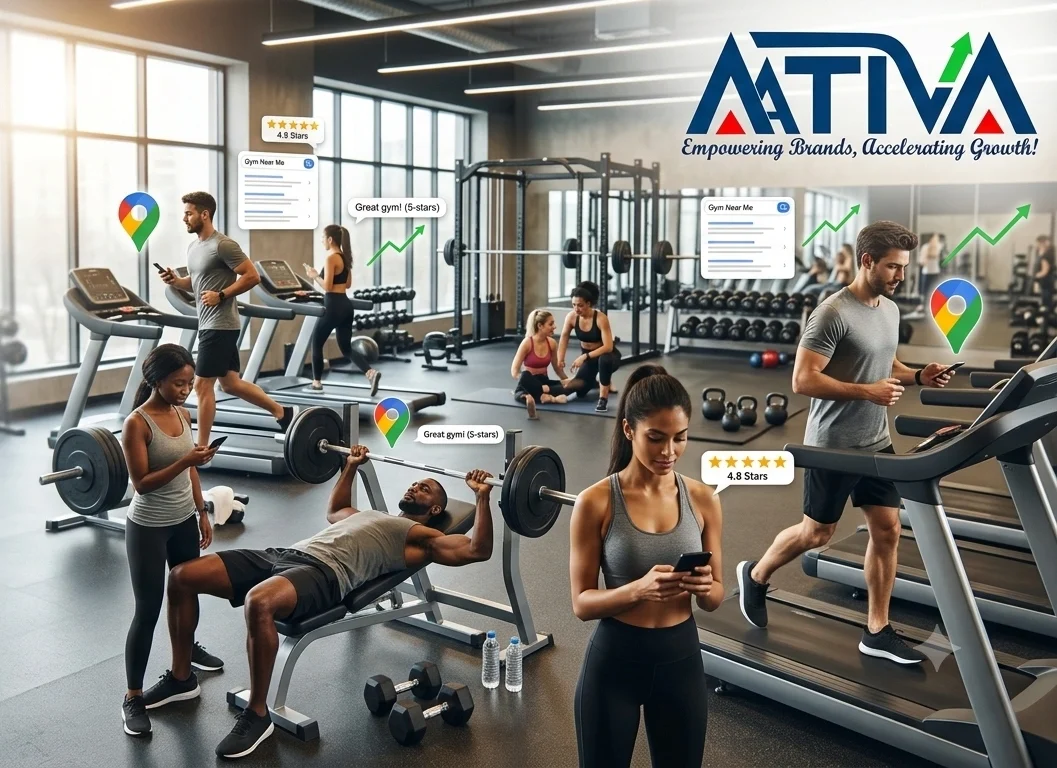
How to Rank Your Gym Higher in Local Search Results
Local SEO for gyms is the process of optimizing your fitness studio’s online presence so it appears in Google’s local results when people nearby search for a gym. It includes Google Business Profile optimization, local keyword targeting, review management, and citation building — and it helps gyms get more members without spending on paid ads.
Local SEO for Fitness Centers
You have the equipment. You have the trainers. You have the floor space.
But every month, new members walk into the gym down the street — the one with a mediocre setup and a basic website — simply because they showed up first on Google Maps.
That’s the reality for hundreds of gym owners across the USA right now. The fitness business is no longer won inside the gym. It’s won on the search results page before someone even steps out of their house.
Local SEO for gyms changes that. This guide will show you exactly how to make your gym the first thing people see when they search ‘gym near me’ or ‘best fitness studio in [your city]’ — without burning your budget on paid ads
If someone in your city searches ‘gym near me’ right now, does your gym show up in the top 3 results?
If not, you’re losing potential members to competitors who may not even have a better facility — they just rank higher. That’s what Local SEO fixes.
This guide covers exactly what Local SEO means for gyms in the USA, why it works, and the 5 steps that consistently produce results in 2026.
Why ‘Gym Near Me’ Searches Are Worth More Than Any Ad You’ll Run
Over 2.2 million people search ‘gym near me’ on Google every month in the USA. These are not casual browsers — they are people with their shoes on, ready to sign up. That’s why appearing in the local map pack (the top 3 gyms on Google Maps) is the highest-ROI marketing move available to any gym owner.
But here’s the problem: most gyms either have an incomplete Google Business Profile, inconsistent directory listings, or no location-optimized content. Any one of these alone can drop you out of the top 3.
📌 Quick Answer — What does Local SEO do for gyms?
Local SEO puts your gym in front of people actively searching for a fitness studio in your area.
It improves your Google Maps ranking, brings in organic calls and walk-ins, and costs far less per lead than Google Ads.
5 Local SEO Steps That Get Gyms More Members in 2026
Step 1 — Fully Optimize Your Google Business Profile
Your Google Business Profile (GBP) is the single most important ranking factor in local search. A gym with a complete, active GBP outranks a gym with a better website almost every time.
- Set your primary category to ‘Gym’ or ‘Fitness Center’ — add secondary categories like ‘Personal Trainer’ or ‘Yoga Studio’
- Upload 20+ real photos — gyms with 40+ photos get 2.7x more direction requests per Flento’s 2026 analysis
- Post weekly updates, class schedules, or membership offers to keep the profile active
- Enable Q&A and answer questions your prospects commonly ask
- Respond to every review — positive and negative — within 48 hours
Step 2 — Build Location Pages on Your Website
One generic homepage is not enough for local ranking. Google needs to see location-specific signals on your website. If you serve one city, create one dedicated city page. Multiple locations need individual pages with unique content.
Each page should include your city name in the H1, the full address and phone number in text (not just an image), an embedded Google Map, and local member testimonials.
Step 3 — Get More Reviews — Consistently
Review volume and recency matter more than just star rating. A gym with 180 reviews at 4.6 stars outranks a gym with 25 reviews at 4.9 stars in most markets.
- Send a direct SMS with your Google review link right after a great class or a member’s first month
- Train your front desk to ask verbally after check-in
- Never offer incentives — Google can penalize review gating
Step 4 — Fix Your NAP Consistency Across Directories
NAP stands for Name, Address, Phone. Google cross-checks your gym’s information across Yelp, Bing, Apple Maps, Facebook, and 50+ other directories. Even a small inconsistency — ‘St.’ vs ‘Street’ — dilutes your local authority.
- Audit your listings on Yelp, Bing Places, Apple Maps, Mindbody, ClassPass, and Facebook
- Make sure your gym name, address, and phone number match exactly everywhere
- Add your gym to your local Chamber of Commerce directory for a high-authority backlink
Step 5 — Publish Local Content That Ranks
A blog isn’t just for workout tips. It’s a local SEO engine when the content targets city + service keyword combinations.
- Best Gyms in [City] 2026— include your gym and rank for the term
- Personal Training in [Neighborhood] — What to Expect
- Our New [City] Location Is Now Open — Member FAQ
Each post builds topical authority, earns internal links, and signals local relevance to Google over time.
What Gym Owners Lose by Ignoring Local SEO
The cost of inaction is concrete. Without local SEO, every January surge — when gym searches spike 300%+ nationally — goes entirely to competitors who rank higher. Your paid ad spend increases to compensate for missing organic traffic. New members find the competitor first simply because they appear on the map.
The average cost per lead from paid ads for gyms in the USA is $30–$80. Local SEO leads cost a fraction of that — and compound every month instead of stopping the moment your ad budget pauses.
How Ativa IT Solutions Helps Gyms Rank Locally
At Ativa IT Solutions, we build Local SEO systems for gyms and fitness studios across the USA — from Google Business Profile audits and location page creation to citation building, review strategy, and monthly local content.
Every gym we work with gets a strategy built around their city, their competitors, and their membership goals — not a generic template.
| 🚀 Get a Free Gym SEO Audit — No Commitment
We’ll show you exactly where you’re losing members to competitors on Google and what it would take to fix it. |