
What Is Agentic Checkout? A Simple 2026 Guide for Ecommerce Sellers
If you sell online, you’ve probably heard the buzz around AI shopping agents, ChatGPT Shopping, and agentic commerce — and you’re wondering what it actually means for your store. This guide breaks down agentic checkout in plain English, so you can prepare your business for the biggest shift in ecommerce since mobile shopping.
What Is Agentic Checkout?
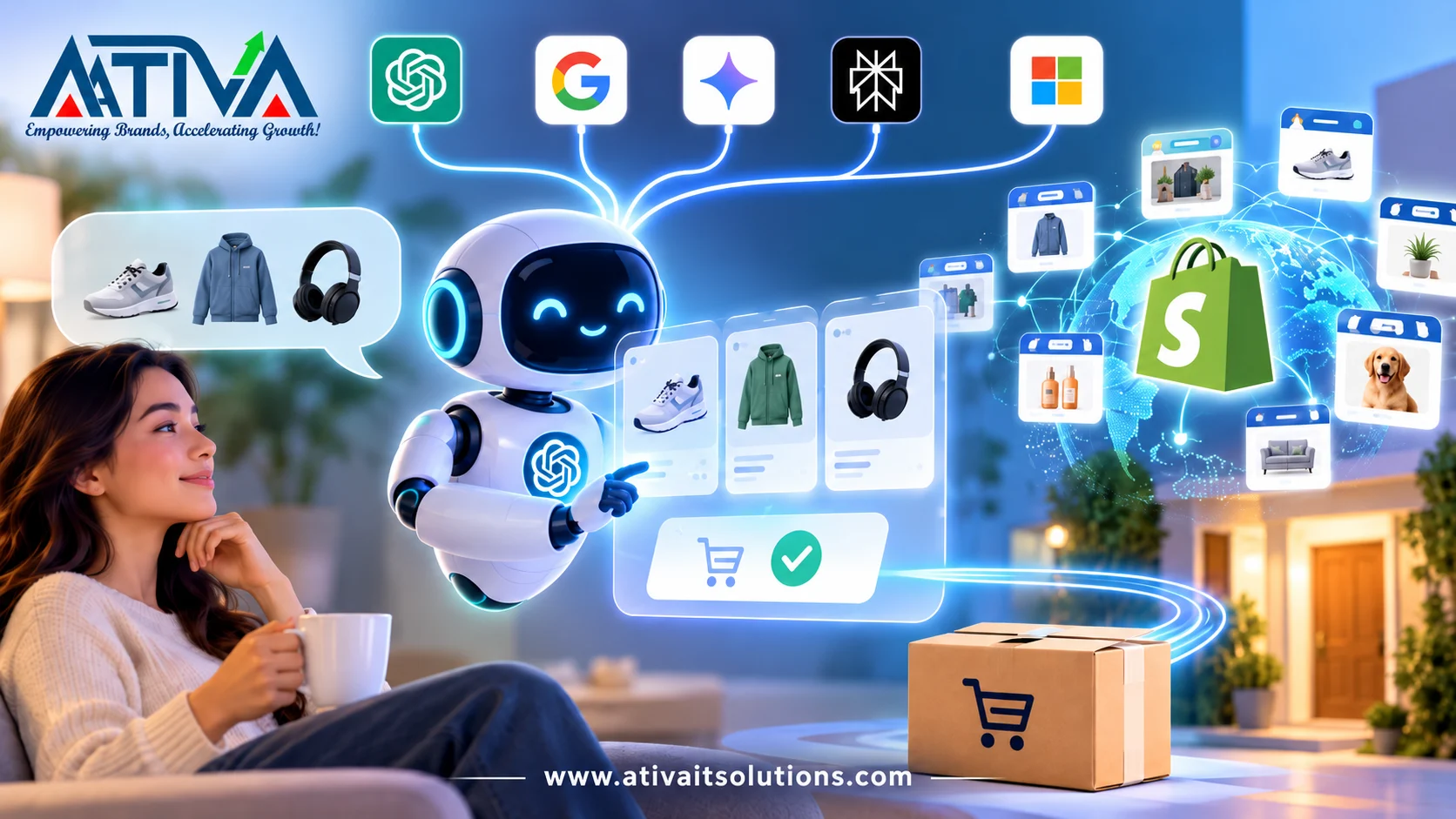
Agentic checkout is when an AI agent completes a purchase on behalf of a shopper — without the person manually browsing, clicking “add to cart,” or typing their card details. The shopper simply tells an AI assistant (like ChatGPT, Gemini, or Perplexity) what they want, and the agent searches, compares, and buys it for them.
In traditional ecommerce, a human does everything: search, compare prices, read reviews, add to cart, and checkout. In agentic commerce, the shopper sets the goal (“find me running shoes under $100, size 10, ship by Friday”) and the AI agent executes every step, including payment.
Why Agentic Checkout Matters in 2026
This isn’t a future trend anymore — it’s live infrastructure. Here’s what’s happening right now:
- Google and Shopify co-developed the Universal Commerce Protocol (UCP), announced at NRF in January 2026, covering everything from product discovery to checkout and post-purchase support.
- Google AI Mode in Search and the Gemini app now support agent-driven checkout with Google Pay and PayPal.
- ChatGPT Shopping is live for all U.S. users, with Etsy and over 1 million Shopify merchants already participating, while Google’s AI Mode has brought on early partners like Wayfair, Chewy, and Etsy.
- Microsoft Copilot supports checkout through the Agentic Commerce Protocol (ACP), and Perplexity offers instant purchasing powered by PayPal.
On the demand side, adoption is accelerating fast. A third of consumers already expect at least 10% of their purchases to be AI-driven within a year, and 72% of merchants agree that shoppers will adopt agent-led buying faster than businesses are ready for.
The Three Protocols Every Seller Should Know
You don’t need to be a developer to understand the basics, but these three names will keep showing up:
- UCP (Universal Commerce Protocol) – built by Google and Shopify, covering the full shopping journey from discovery to checkout.
- ACP (Agentic Commerce Protocol) – developed by OpenAI and Stripe, focused specifically on checkout.
- MCP (Model Context Protocol) – created by Anthropic, giving AI models real-time access to data.
Most retailers will end up needing at least two of these, and Shopify merchants already get both UCP and ACP bundled through Agentic Storefronts.
A Reality Check- Not Every Experiment Survived
It’s worth knowing that agentic checkout hasn’t been a straight line of success. OpenAI and Stripe launched an “Instant Checkout” feature inside ChatGPT in September 2025 that let people buy products without leaving the chat — but by March 2026, OpenAI retired it after roughly five months, with around thirty Shopify merchants integrated and sales close to zero.
OpenAI pivoted instead to retailer-operated experiences called “ChatGPT Apps,” now used by Walmart, Etsy, Target, and Instacart. The lesson for sellers: the flashy one-click buy button failed, but the underlying protocol and infrastructure kept growing. Don’t wait for a single “winning” checkout button — build for the ecosystem instead.
How Agentic Commerce Changes What Gets You Sales
In classic ecommerce, product photos, branding, and persuasive copy drive conversions. That changes when the buyer is a machine.
In agentic commerce, AI agents make purchasing decisions through structured APIs rather than by browsing storefront pages, and most enterprise commerce systems were built around human, session-based interaction instead. A shopping agent parses the shopper’s intent — budget, specs, brand preference, delivery window — and translates it into API calls that query product catalogs, pricing, availability, and shipping in real time.
That means:
- Structured product data matters more than ever. Pages with structured data are cited 3.1x more frequently in Google AI Overviews.
- Metadata and catalog completeness are the new SEO. Retailers who don’t optimize metadata, permissions, and checkout for agentic AI risk becoming invisible to assistants like ChatGPT and Gemini.
- New KPIs replace old ones. Traditional metrics like sessions, bounce rate, and CPC don’t capture agentic performance — the numbers that matter now are found rate, position quality, share of voice against named competitors, catalog completeness score, AI-referred conversion rate, and citation rate in AI answers.
How Big Is the Opportunity?
The numbers explain why sellers can’t afford to ignore this:
- Morgan Stanley forecasts that 10–20% of US ecommerce sales will be agent-driven by 2030, and McKinsey estimates agentic commerce could generate up to $1 trillion in orchestrated US retail revenue by 2030 — as much as $3 trillion globally.
- By 2030, nearly half of online shoppers are expected to use AI agents, accounting for roughly 25% of their spending and adding $115 billion to the US ecommerce sector.
- In the near term, 60% of shoppers expect to use AI agents within the next 12 months, and 73% are already familiar with AI shopping tools.
Should Sellers Worry About Trust?
Yes — and buyers do too. 27% of consumers say they trust no organization to operate an AI shopping agent, and 24% say they will never delegate purchases to AI at all. This is actually good news for sellers: it means agentic checkout will roll out gradually, giving you time to adapt rather than forcing an overnight overhaul.
5 Practical Steps to Prepare Your Store for Agentic Checkout
Clean up your product feed
Make sure titles, prices, sizes, availability, and shipping details are complete, accurate, and structured (schema markup, Merchant Center feeds, Shopify product data).
Get on Shopify’s agentic storefront tools if you’re on Shopify
UCP and ACP support is already built in for many merchants.
Watch your “found rate” and “citation rate”
tart tracking whether AI tools mention your products at all, not just your Google Ads ROAS.
Keep post-purchase support strong
Agents increasingly weigh return policies, refund speed, and customer service quality when deciding where to route future purchases.
Don’t bet everything on one platform
With three competing protocols (UCP, ACP, MCP) and fast-moving experiments (some succeeding, some shutting down), spread your integration efforts rather than going all-in on a single AI checkout partner.
The Future of Ecommerce Is Agent-Led Shopping
Agentic checkout isn’t science fiction — it’s already running through Google AI Mode, ChatGPT Shopping, Microsoft Copilot, and Perplexity, with millions of Shopify merchants connected. For ecommerce sellers in 2026, the winning move isn’t chasing the flashiest AI buy-button. It’s making sure your product data, catalog, and post-purchase experience are ready for machines to find, evaluate, and recommend you — because that’s who’s doing more and more of the shopping now.