
How Small Businesses Can Compete With Big Brands Online
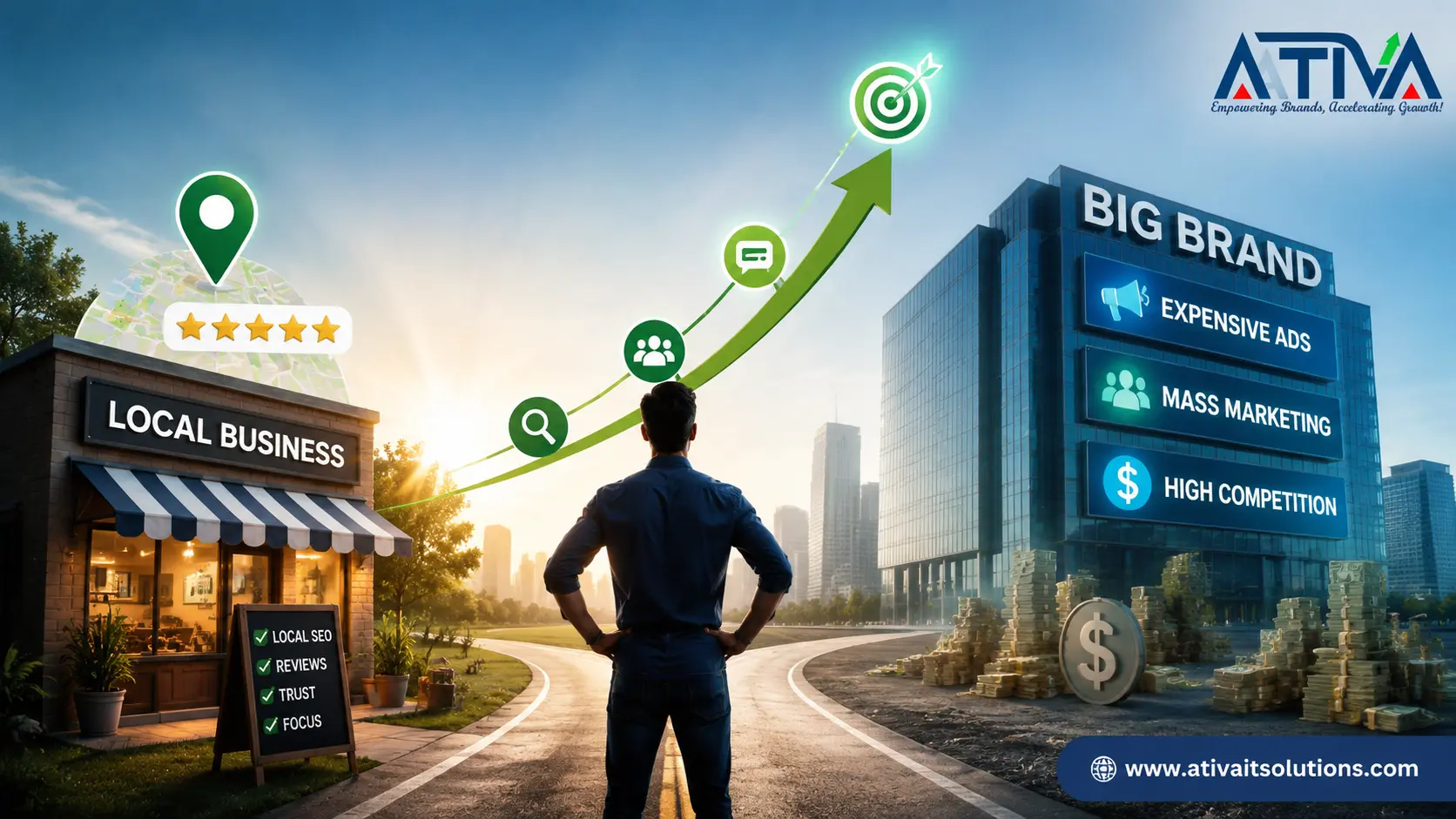
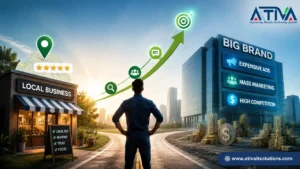
Small businesses don’t need a bigger ad budget to compete online — they need a sharper strategy. While large brands win on scale, small businesses can win on speed, relevance, and trust: by dominating local search, owning a specific niche, and answering the exact questions their customers are already asking.
It’s easy to assume the game is rigged. Big brands can spend millions across search, social, and TV in a single quarter — more than most small businesses will spend in a decade. That budget gap is real. But it doesn’t automatically translate into winning every customer, especially online, where relevance and trust often matter more than reach.
Why Big Brands Seem to Have the Edge
Large companies can outbid almost anyone for broad, high-volume keywords and can afford to advertise across every channel at once. That’s a genuine disadvantage for a small business trying to rank for a generic term like “marketing agency” or “software company.”
The good news: most customers aren’t actually searching that broadly. They’re searching with intent, location, and specifics — and that’s exactly where small businesses can win.
The Real Advantages Small Businesses Have
- Speed. A small business can change its messaging, pricing, or offer today. A large corporation needs approvals, committees, and weeks of lead time.
- Niche focus. Big brands try to serve everyone. A small business can go deep on one audience and become the obvious choice for them.
- Personal connection. Customers increasingly prefer brands that feel human, responsive, and local rather than automated and corporate.
- Direct customer knowledge. A local business owner hears the same questions from real customers every week — that’s content big brands simply don’t have access to.
Strategy 1- Own Local Search First
Local search is the single biggest opportunity most small businesses underuse. Consumers now research a business online before ever walking in or calling — 97% of people check a company’s online presence before visiting or purchasing. Nearly half of all Google searches carry local intent, and that share has grown from roughly 30% in 2019 to 46% today as mobile search and location data have become central to how people search.
“Near me” searches specifically have exploded — Glimpse tracked more than 200 million monthly “near me” searches in early 2026 — and they convert fast. Roughly 76% of people who search “near me” visit a business within a day, and about 28% of those searches end in a purchase. Ranking in the local map pack pays off directly: businesses that appear there earn 126% more traffic than those that don’t rank in the top three local positions.
Despite this, most businesses leave the opportunity on the table — 58% of companies still don’t optimize for local search, and only 30% have an actual plan for it. That gap is where a small business can move ahead of a national competitor with zero local presence.
What this looks like in practice:
- A fully filled-out Google Business Profile with accurate categories, service areas, and photos
- Location-specific pages for every city or neighborhood you serve (e.g., “SEO agency in Miami” rather than just “SEO agency”)
- Consistently collected, recent customer reviews — top-ranking profiles average around 250 reviews
Strategy 2- Compete on Long-Tail Keywords, Not Broad Ones
Big brands fight over broad, expensive keywords. A small business rarely needs to win that fight. Instead, target the specific, intent-driven phrases people actually type when they’re close to making a decision — “affordable SEO agency for small business in Doral” instead of “SEO agency.” These long-tail terms have lower search volume but far less competition and much higher conversion rates, because the searcher already knows what they want.
Strategy 3- Publish Content Big Brands Can’t (or Won’t) Write
Large companies tend to produce broad, generic, corporate-safe content. A small business can outperform that by publishing specific, practical answers to the exact questions its own customers ask — pricing breakdowns, comparisons, local case studies, and “how it actually works” explainers drawn from real experience. That kind of specificity is difficult for a big brand to replicate at scale, and it’s also exactly the kind of content that performs well in AI-generated search answers, which favor clear, direct, well-structured information over vague marketing copy.
This matters more every year: AI-powered overviews now appear in a large and growing share of local searches, and a meaningful share of consumers already ask AI tools directly for local business recommendations. Structuring content to answer questions clearly — in plain language, with a direct answer up front — helps a small business show up in both traditional search results and AI-generated ones.
Strategy 4- Build Trust Signals Big Brands Struggle to Fake
Big brands rely on brand recognition. Small businesses can build trust just as effectively through visible proof: recent reviews, real client results, transparent pricing, and fast, human responses to inquiries. Local, mobile-first searchers are also more likely to convert on a business with a fast, mobile-friendly site and a clear call to action — small details that are easy to fix and easy for a bigger, slower-moving competitor to overlook.
Strategy 5- Go Deep on One Niche Instead of Wide
Rather than trying to be “a marketing agency for everyone,” a small business can dominate a specific niche — a specific industry, city, or service — and become the obvious first choice within it. Narrower positioning reduces direct competition, makes messaging sharper, and builds the kind of word-of-mouth reputation big, generalist brands rarely earn.
A Simple Roadmap
- Fully optimize your Google Business Profile and collect reviews consistently
- Build location- and service-specific pages instead of one generic homepage
- Target long-tail, intent-driven keywords rather than broad, expensive ones
- Publish answer-first, specific content based on real customer questions
- Make trust visible: reviews, results, fast response times
- Pick a niche and own it before trying to expand
FAQs-How Small Businesses Can Compete With Big Brands Online
1.Can a small business really outrank a big brand in search results?
Yes — especially for local, long-tail, and niche-specific searches, where relevance and specificity matter more than domain authority or ad spend.
2.Is local SEO worth it for a small business with a small budget?
Local SEO consistently produces a lower cost per lead than traditional outbound marketing, making it one of the most efficient channels available to small, budget-conscious businesses.
3.How long does it take to see results from these strategies?
Local search and long-tail keyword improvements can show measurable movement within a few months, while niche authority and content-driven trust typically build over six months to a year of consistent publishing.